Running a Pre-Personalization Workshop: Key Additional Activities
In preparing our latest article for A List Apart, on how to structure an effective pre-personalization workshop, it was important to concisely draw a picture of our personalization workshop as a method of collecting recipes for a cookbook.
While the ingredients are the key area of focus for people new to this approach, there is more to say about what makes a good recipe, and how that becomes a cookbook in a team’s personalization practice.
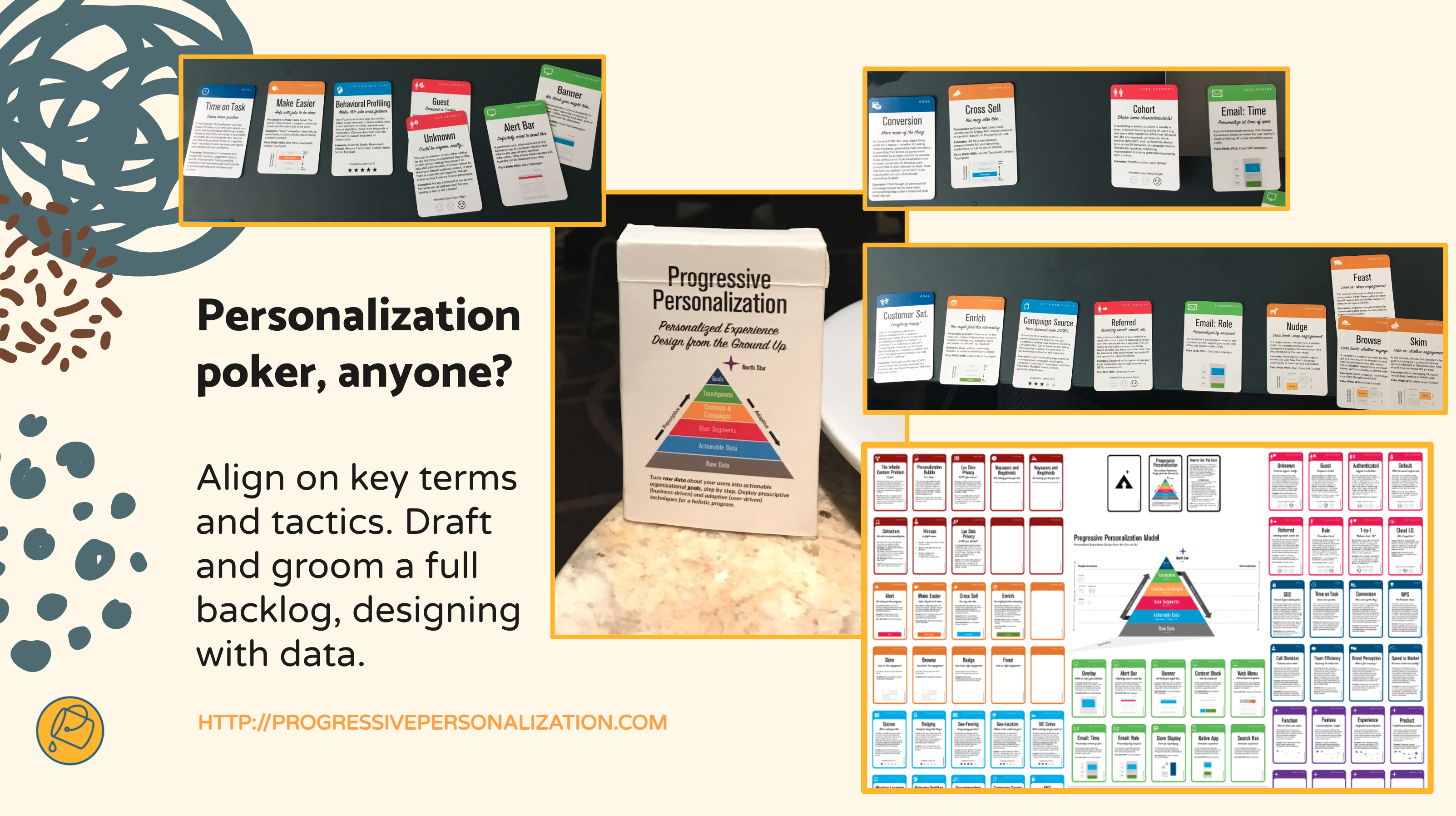
From funnel to pyramid…
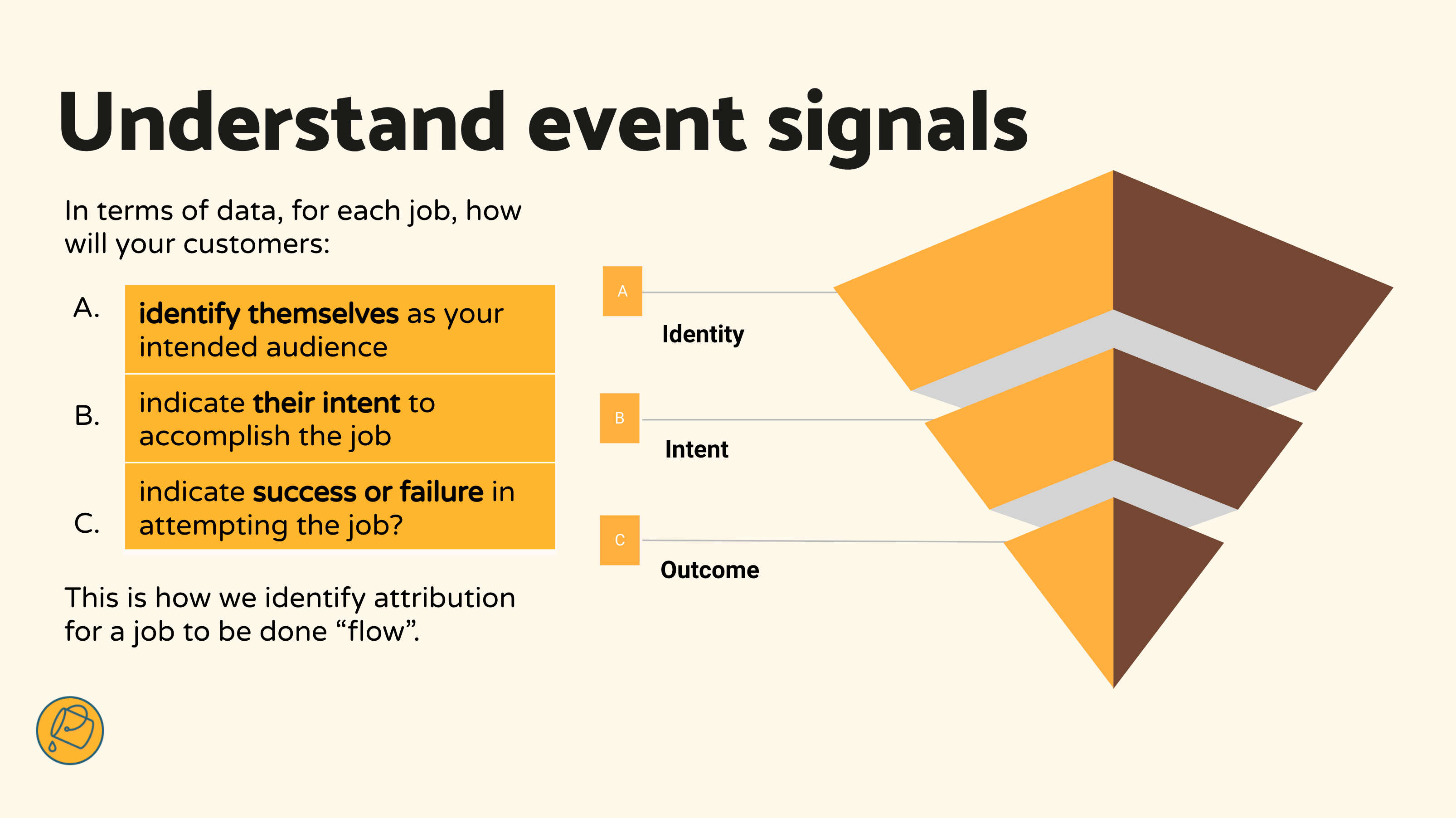
First, the exercise of recipe-creation entails thinking closely of the ideal end-user audience for your “dish”. Maybe you want to emphasize certain content to one segment or cohort of your website audience, for example.
What’s more, you’ll need to book-end the consideration of whom you are targeting with a way that audience can identify themselves, and they can perform a desired action: likely a microinteraction, like clicking a button.
Just as important is finding ways a user can indicate their failure to, or abandonment of, complete the desire action.
These 3 markers are the essence for how we will measure whether our “meals” are appreciated. They are the event signals illustrated in the funnel diagram below.
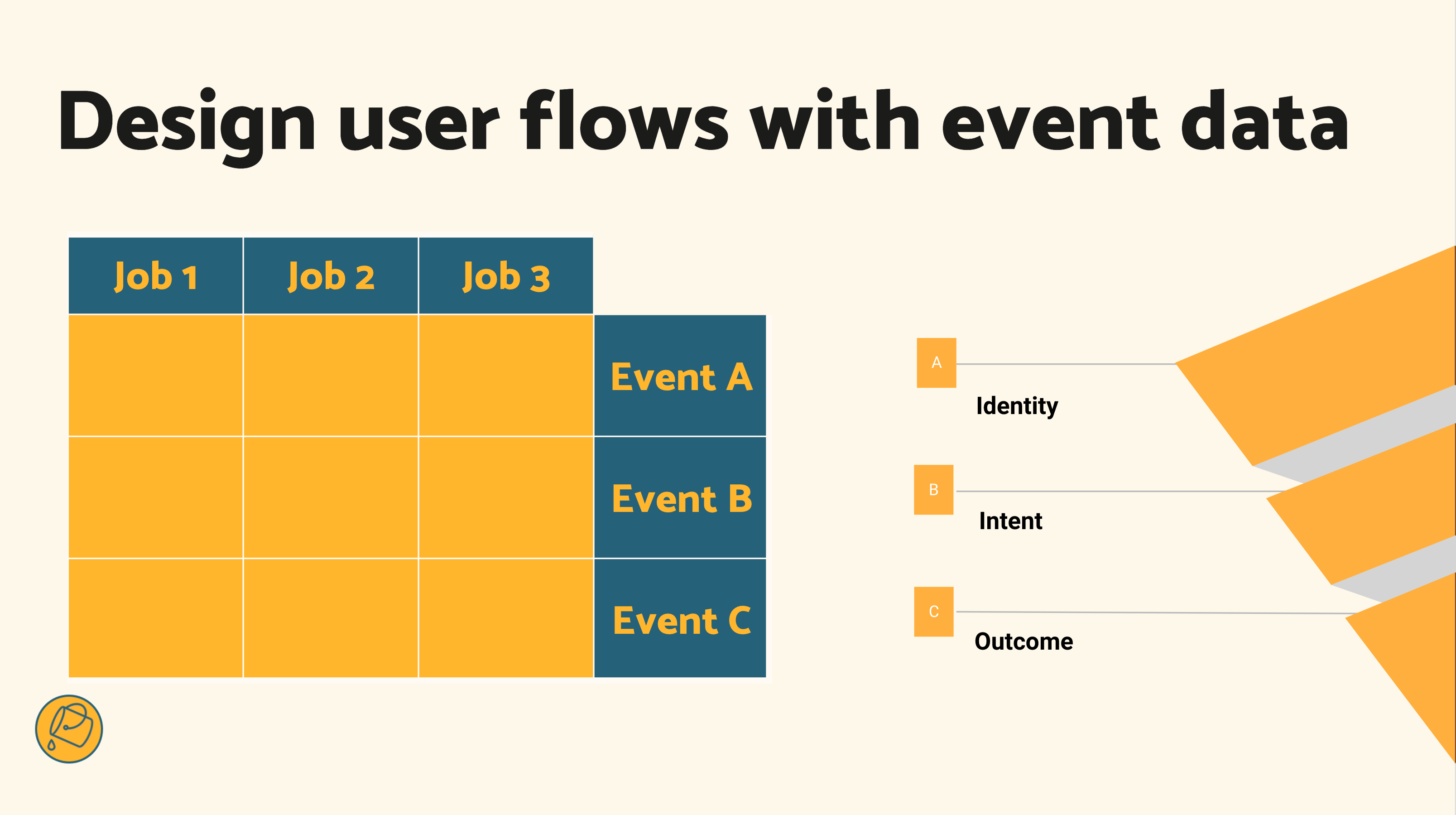
Every recipe is a job, and you can start to map out the 3 event signals across jobs.
Naturally, a detailed customer journey artifact will greatly aid in devising recipes around key moments that matter to your digital product or place, and to utilizing specific types of content, data, and interaction motifs.
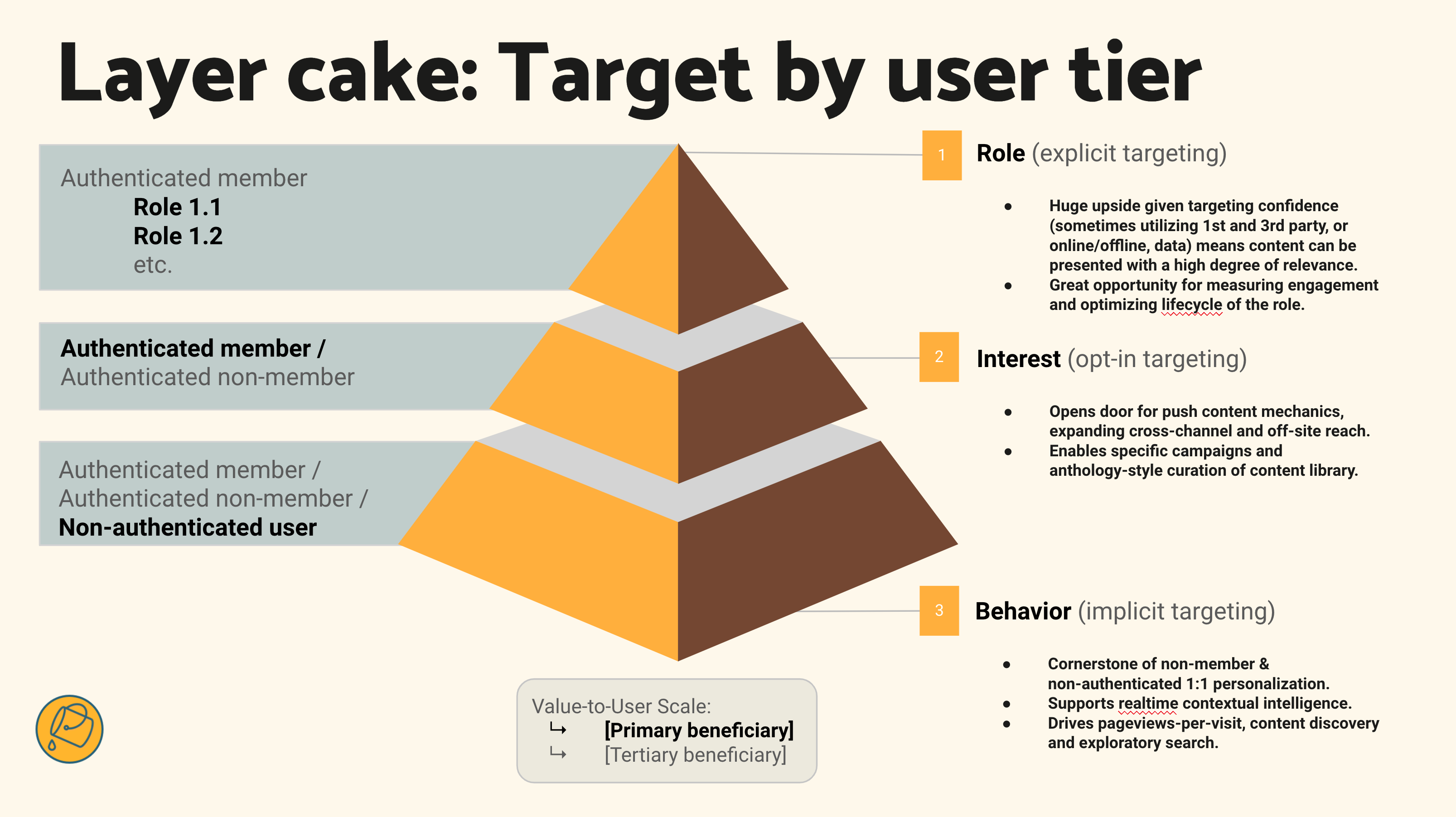
Even without having those details on hand, after identifying a few potential recipes we recommend inverting the funnel model back to a pyramid diagram (I call this “the layer cake”), and use that as a way of thinking concretely about how and when on the whole types of users will be targeted, as this is consequential to how the content will be expressed dynamically.
It is also important for de-conflicting potential personalizations that may otherwise be contradictory or confusing to those targeted multiple times. The slide below illustrates a perspective on 3 jobs that are triggered by 3 different conventional modes of targeting.
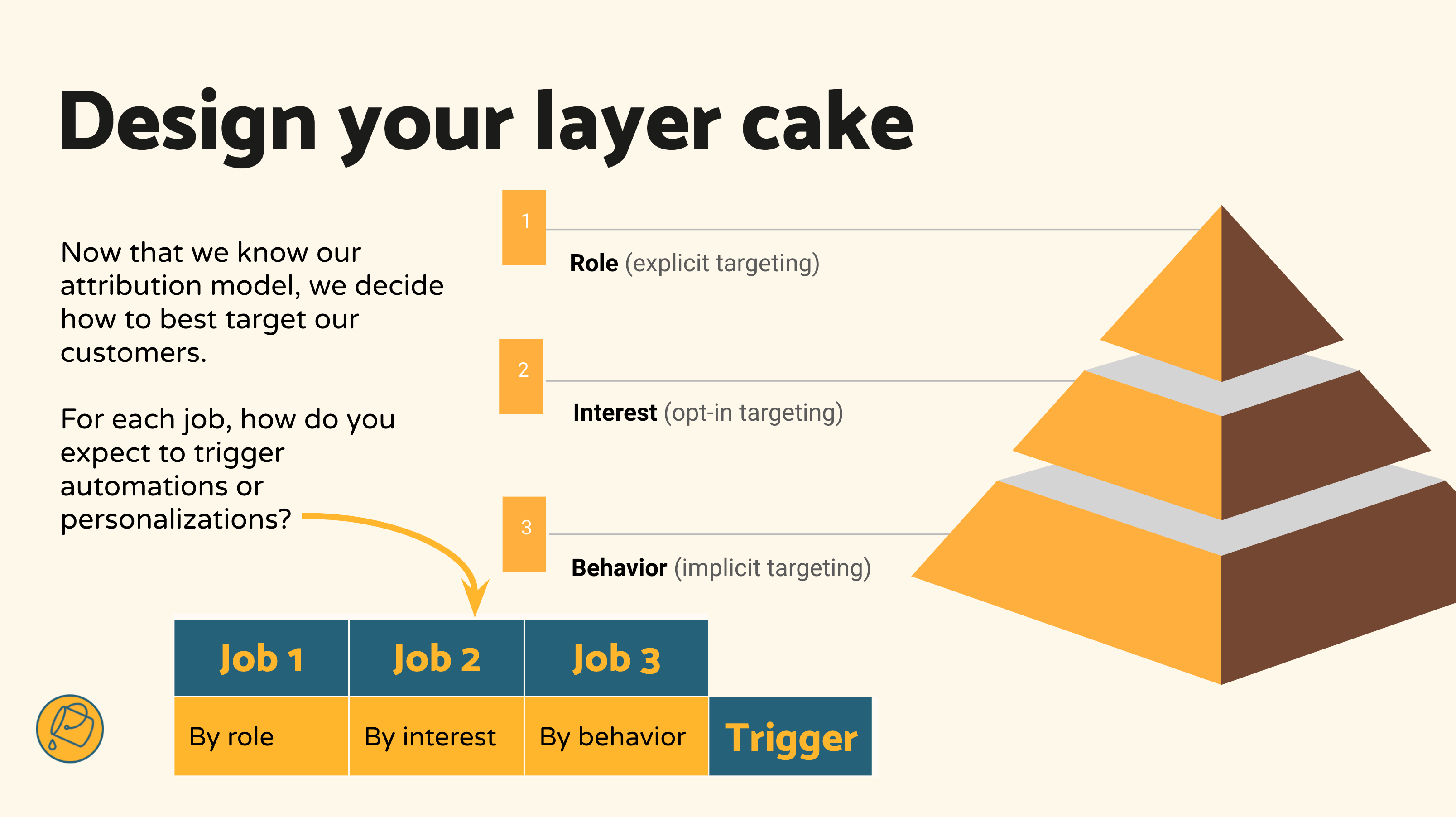
It is important to locate your intervention so that we can best attribute the conditions under which it is triggered.
We look at targeting of users across a spectrum of techniques, progressing from broad to narrower forms of personalization—generally, these tend to co-exist overtop one another, so it is very good to document a consistent approach. (For those using a personalization engine, the software typically has ways of detecting conflicts between, say, different rules you create, but these guardrails have their own limitations.) The pyramid or layer cake is one common visual structure of modeling increasing narrowness and sophistication:
1. whereby users performing given behaviors in an app,
2. whereby users self-select themselves (say, through specific answers to an onboarding form submittal), and
3. whereby regular users who authenticate with your service might have specific roles and other forms of identifying metadata that make more explicit targeting possible and done with increased confidence.
Your layer cake should start simply, but it is a fair way of mapping an understanding of how you expect to design with user data.
…and from recipe to cookbook
The final act in the workshop, the “work your plan” as opposed to the “plan your work” largely described in the ALA article, involves a closer consideration of the recipe in the wider program context:
Identify or refine some placeholder rules and business logic, even if machine learning is going to be ultimately involved;
Identify or refine likely employed design elements;
Verify what data is actionable for targeting and reporting, and any pre-work needed there;
Square where you sit in terms of resourcing readiness with a crawl-walk-run confidence score; and
Enhance and update existing jobs-to-be-done or customer journey analyses.
Once we’ve baked up our confection with these enriching details, we’ll put an operational model to it. How will it be measured, and according to what meaningful KPIs? This includes a sample analytics plan and staffing considerations that then crystallize in a shared, well, bake-off session of pitching one another the various ideas, complete with a business plan in miniature.
There are different ways voting may proceed, and then a zoomed-out, rank-prioritized roadmap gradually emerges from this backlog of worthy, socially validated concepts.
Competitive learnings gained from this pitching exercise spur even more innovation, and can form the basis for an annual or regular organizational ritual. This is our way of moving from a project-mindset to a program with its own designated pilot, including a lot of internally aligned thinking, common elements, and coordination.
Hopefully, this provides a good amount of detail for those pursuing these types of pre-personalization workshops in future. As always, send your thoughts and questions!